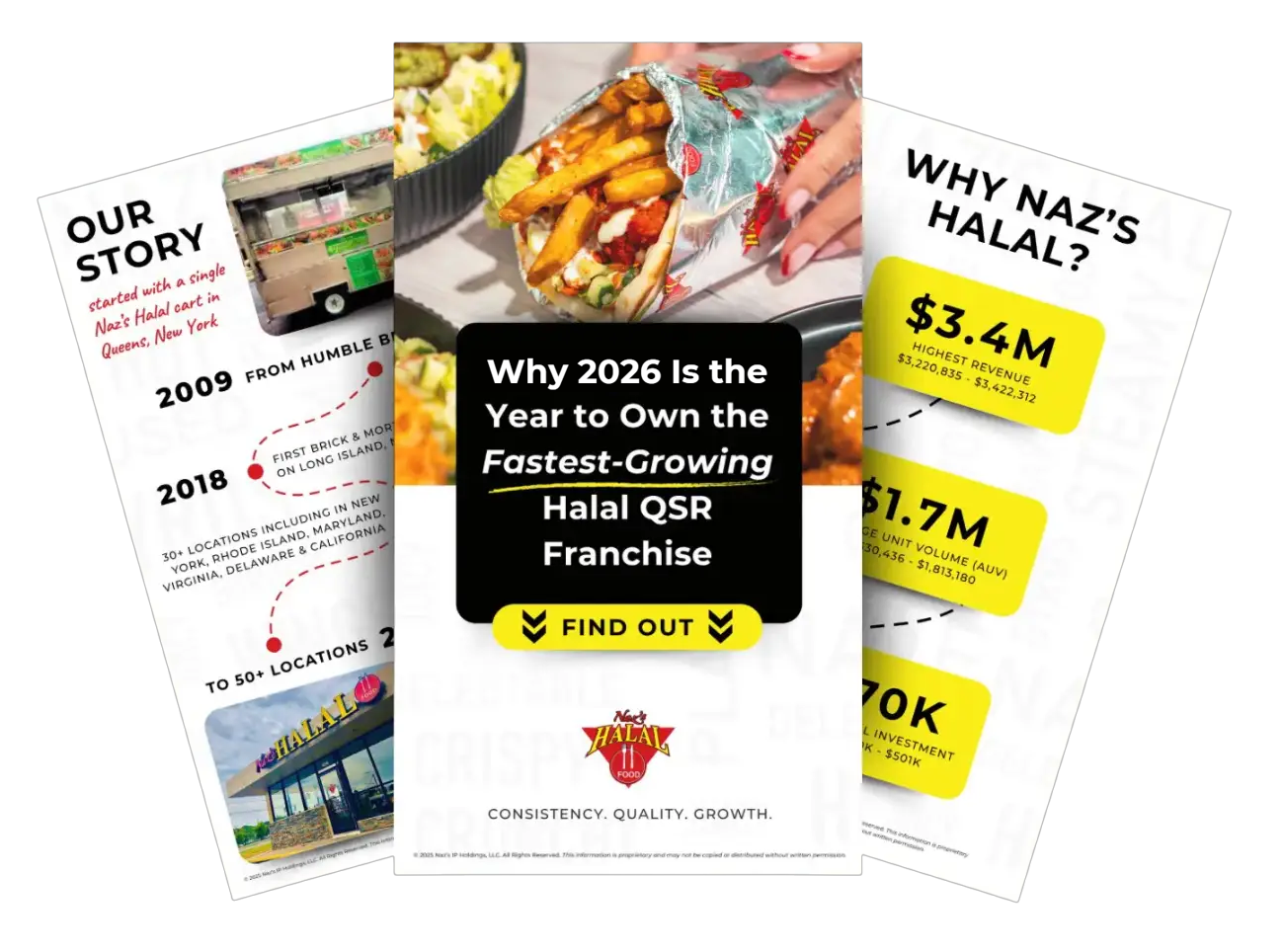
The halal food industry is entering a new era—one where demand is no longer limited to niche communities. In 2025, halal dining represents one of the most promising and underserved sectors in the food franchise world.
Whether you’re a first-time investor or a seasoned multi-unit operator, now is the time to take halal QSR seriously.
Want to see a promising pick?
Download: Why 2025 Is the Year to Own One of the Fastest-Growing Halal QSR Franchises
What Does “Halal” Really Mean for the Food Business?
Halal means “permissible” in Arabic, and it refers to food prepared according to Islamic dietary laws. But halal-certified food isn’t just for Muslim consumers—it’s gaining attention from a broader audience that’s increasingly focused on food quality, sourcing, and transparency.
Today, halal signals more than a religious designation. It’s also:
- A marker of clean, traceable protein sourcing
- Associated with freshness, authenticity, and ethical preparation
- Aligned with rising consumer interest in global flavors and cultural inclusion
This growing awareness is reshaping how people dine—and how investors approach the food sector.
Halal Market Growth: What the Data Tells Us
According to projections by Grand View Research and Dinar Standard, the global halal food market is expected to surpass $2 trillion by 2030, with the U.S. seeing some of the fastest domestic growth.
Key trends:
- The American Muslim population has surpassed 3.5 million and continues to grow
- Halal options are increasingly available on mainstream delivery apps and in urban centers
- Non-Muslim consumers are adopting halal for perceived quality, transparency, and flavor
Despite this, most U.S. cities still lack a dominant halal QSR brand—leaving open territory for operators ready to move.
 Get Our Kit
Why Halal + QSR Is the Sweet Spot
The real breakout isn’t in halal groceries or butcher shops—it’s in halal quick-service restaurants. This is where halal goes from being a product to becoming a platform.
Here’s why investors are paying attention:
- QSR models scale faster and operate leaner than full-service concepts
- Halal menus offer clear differentiation without alienating mainstream customers
- The category has no legacy saturation—leaving room for leadership
For franchise buyers looking for high guest demand + lower buildout complexity, this is a rare alignment.
Explore how this QSR model makes halal scalable:
Download the full 2025 franchise outlook
Case Study: Naz’s Halal
Founded in Queens, NY, Naz’s Halal has grown from a single cart to nearly 50 locations across the U.S.—without sacrificing authenticity or operational clarity.
What sets it apart:
- Average unit volume (AUV) exceeds $1.6 million, as disclosed in Item 19
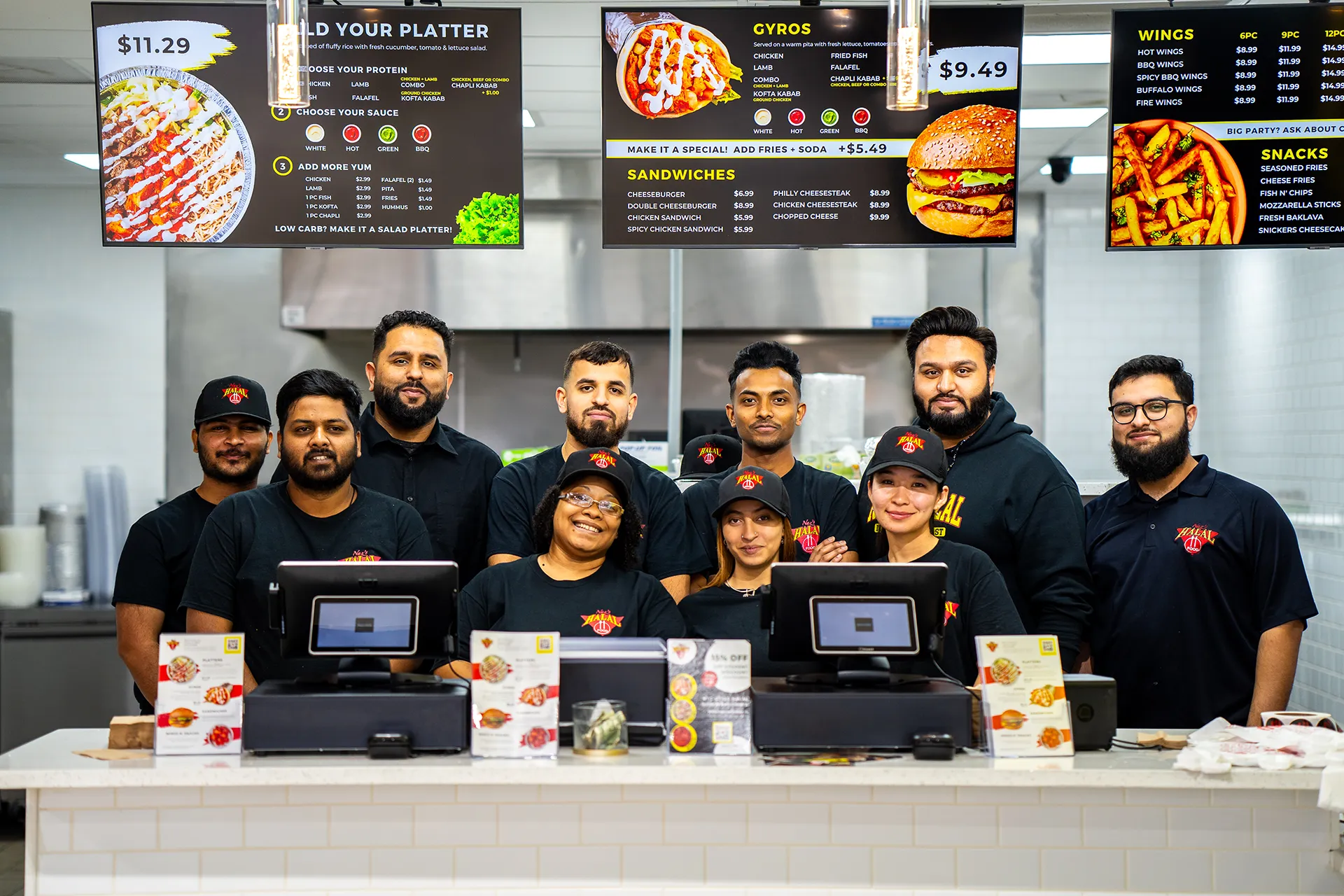
- A simplified counter-service menu featuring halal chicken, lamb, and house sauces
- Tech-forward systems like Frannie AI and Superorder
- 100 hours of structured franchisee training and ongoing support
Many operators now opening their second or third unit cite ease of execution + strong brand appeal as key drivers.
“We’ve built this to scale,” says Elizabeth Sandoz, Director of Franchise Development. “It’s fast, flavorful, and backed by tested structure.”
Looking Ahead
As fast-casual competition continues to evolve, halal QSR is one of the few categories where consumer demand exceeds supply—and where true market leadership is still up for grabs.
Operators who act now have the chance to:
- Secure prime territories
- Differentiate with a modern halal menu
- Serve both niche and mainstream demand with a single concept
Ready to Explore the Halal QSR Franchise Opportunity?
Naz’s Halal is currently awarding select territories to qualified franchisees.